How Mindfulness Affects Children Positively
Mindfulness is an all time favor for the children. Teachers and therapists prefer teaching them mindfulness because of its emotional, social and intellectual benefits. But, the question raises how it affects it and how much it matters?
Mindfulness is the ability to pay full attention to the current moment without thinking about past or present. Just stay on the track and neglect all the inner feelings and emotions.
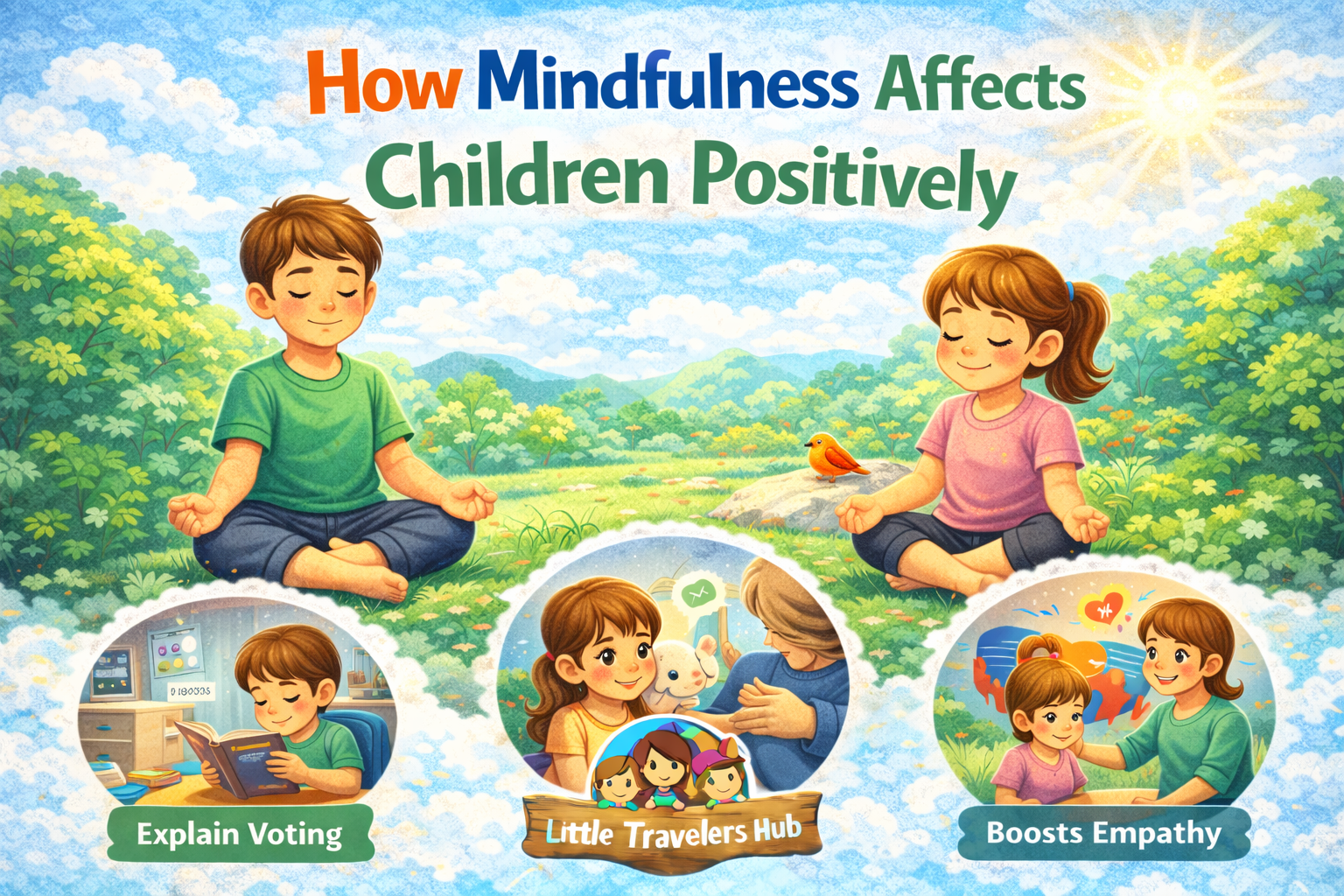
Mindfulness helps children become more aware of their thoughts, emotions, and surroundings in a calm and healthy way. By practicing mindfulness such as focusing on breathing, noticing feelings without judgment, or paying attention to the present moment children learn how to manage stress, improve concentration, and regulate emotions. Over time, mindfulness supports better behavior, stronger emotional resilience, improved relationships, and a greater sense of self-confidence, helping children navigate daily challenges with balance and clarity.
Positive Effects of Mindfulness on Children
| Area of Development | Positive Impact | How Mindfulness Helps |
|---|---|---|
| Emotional regulation | Fewer emotional outbursts | Teaches awareness of feelings |
| Focus and attention | Better concentration | Trains the mind to stay present |
| Stress management | Reduced anxiety | Encourages calm breathing |
| Behavior | Improved self-control | Builds pause before reaction |
| Social skills | Better empathy | Increases awareness of others |
| Self-confidence | Stronger self-esteem | Promotes self-acceptance |
Benefits Of Mindfullness
When children pay full attention to the current moment either it is positive or negative, it will never affect them negatively. They will be out of stress and it will be positive for their self esteem, confidence and ability to focus. They will perform well in their academic tasks and this will lead to healthier relationships with their peers, teachers and classmates. Mindfulness is necessary for the children suffering from anxiety, depression and stress.
What mindfulness can do to children:
- Lower stress
- Improves self esteem and built
- Required for better academic performance and healthy relationship with everyone.
What Is Mindfulness?
Mindfulness can be easily understood by using the example of a horse and a rider metaphor. Here the brain refers to the beautiful wild horse which is created to process thoughts over and over all the day, just like the horse prepared to run fast. But when the horse is without its rider he has to face many hurdles, patches and dangerous places regardless of whether it results in injury.
The same goes with our brain, until unless we teach our children to process the thoughts positively and deal with them calmly, their brain will keep processing useless thoughts. This is the reason the kids keep asking questions back to back about random things that seem to be confusing for them.
Alternatively, when the horse has the rider or the one who can set directions for him, he will safely run and have some purpose. No matter what stamina and the strength the horse has, the rider has all the responsibility to manage the horse. Here we see a great combination of rider’s skills and horse power which mixes up making them win the races and the tasks which can never be accomplished alone.
If your child knows how to focus their attention on a certain thing, this is what we call mindfulness. It is not less than a blessing and a skill as well which helps children to choose what to focus on and how to stay focused on the present moment even when the brain is distracted towards the moment which is not much helpful.
Skills Included In Mindfullness
- Observe
In case of observation, the children can learn mindfulness by utilizing the scenarios. For example the things children can see, hear, taste, feel or touch from the current moment.
- Exercise
Offer your support to help your child find language that they observe in the present moment as correctly as possible. The act of describing things slowly by words slows their amygdala down and this makes emotions easier to manage.
- Self Soothing
When children start living in the present moment, they also find peace and calming moments around them which make them happier. This is called self soothing, the parents tend to do this for infants. They respond to the crying infants by singing, giving them pacifiers, rocking them, swaddling them etc. These activities intensify the pleasure infants observe through their senses.
Normally, some children tend to self soothe themselves by sucking their thumb, holding a blanket, eating their favorite snack or listening to specific music when they are not in a good mood. Unluckily, some children don’t learn these things naturally. Or sometimes, parents don’t let them, as they discourage them by saying these behaviours are unnecessary and immature.
Well, the children also need to modify their habits and behaviours with time, sucking their thumb in a gathering and having a feeder when they are out of age doesn’t sound appropriate, so they must find ways to sooth in age appropriate ways.
- Explain
The children have sharp senses, they bring them into the moment and make them aware what is in the moment. Then it is explained well in the next step. Children observe information through their brain which goes to the brain’s emotional center resulting in natural feelings or reactions. When children describe what they observe, their other areas get active which helps balance their emotional reaction.
According to the research, when children verbally explain what they experienced through their senses, it gives a soothing effect to the part of the brain that reacts with fear or any random thought. Moreover, it activates the part of the brain that makes them stay calm and make smart choices which assist them accomplish goals.
Mindfulness is all in the favour of children and adults as well, it is the skills that must be practiced regularly. Work regularly with your child and be aware of the present moment. Try to access things which make them emotions peaceful and can make them stay stressless. In the daily tasks, try to teach your kids intellectually, socially and emotionally throughout their lives.
Takeaways Section
Key Takeaways on Mindfulness for Children
- Mindfulness helps children manage emotions calmly
- Regular practice improves focus and attention
- It reduces stress and anxiety in daily life
- Mindfulness supports positive behavior
- Children develop empathy and patience
- Simple practices can have long-term benefits
FAQs
FAQ 1: What is mindfulness for children?
Mindfulness for children means paying attention to the present moment with calmness and awareness.
FAQ 2: At what age can children start mindfulness?
Children can begin simple mindfulness practices as early as preschool age.
FAQ 3: How long should mindfulness activities last for kids?
Even 2–5 minutes a day can be effective, especially for younger children.
FAQ 4: Can mindfulness help children with anxiety?
Yes. Mindfulness helps children recognize and calm anxious thoughts and feelings.
FAQ 5: Do children need special training to practice mindfulness?
No. Simple breathing exercises, guided stories, or quiet moments are enough.
FAQ 6: How can parents encourage mindfulness at home?
Parents can model calm behavior, practice together, and make mindfulness part of daily routines.