How To Make Kids Understand Elections
According to surveys, children don’t take much interest in elections as they consider them just a source of stress and unease. It is believed that elections don’t impact kids but it might not be true. When elections are near, it must be difficult to shield children from the noise in the media and among family members. Moreover, it can’t be helpful if you avoid talking about politics when kids are around.
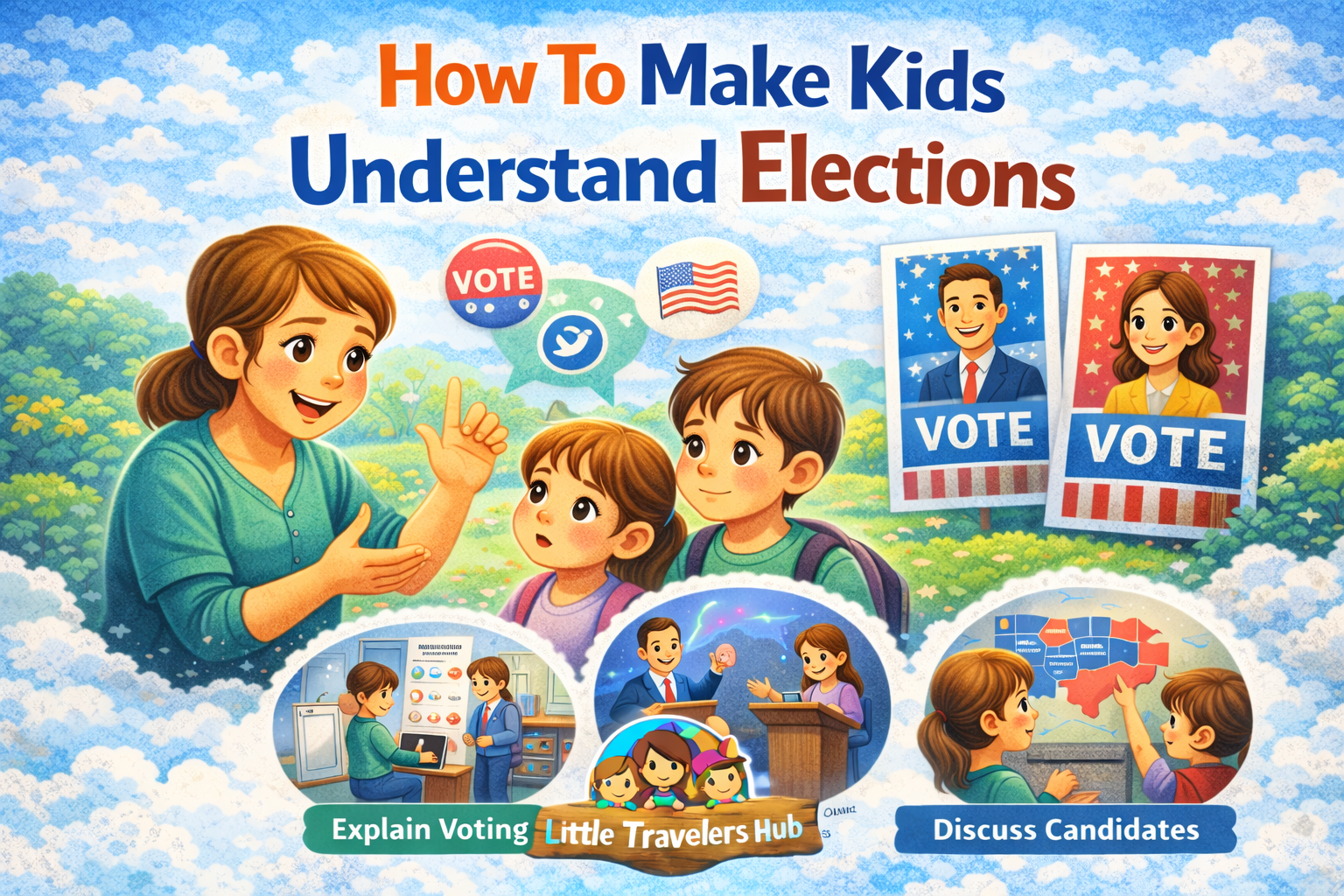
Helping kids understand elections starts with explaining that elections are a way for people to choose leaders and make decisions together. Use simple language, real-life examples (like voting for a class activity), and focus on the idea of fairness and participation rather than politics. Encourage questions, explain that different people can have different opinions, and emphasize respect, rules, and the importance of every vote. Keeping the conversation calm, neutral, and age-appropriate helps children see elections as a positive part of community life.
Explaining Elections to Kids by Age
| Age Group | What Kids Can Understand | How to Explain It |
|---|---|---|
| Ages 4–6 | Making choices together | Compare voting to choosing a game |
| Ages 7–9 | Rules and fairness | Explain counting votes and majority |
| Ages 10–12 | Leaders and responsibilities | Talk about what leaders do |
| Early teens | Opinions and debate | Explain different viewpoints respectfully |
| Teens | Civic responsibility | Discuss rights, duties, and participation |
| All ages | Respect | Emphasize kindness and listening |
Help Kids To Understand What Happens During Elections
Studies show, when things are clear to children they can better react. Similarly, if they clearly get to know what is happening and what’s the reason behind it, they will better learn the voting process and can participate in voting as adults. Here, the age doesn’t matter, in fact the process will help them in understanding the information.
Pre-School Age: Understand Voting & Standpoint
Pre-schooling is the best age for the kids to understand that voting is all about individual opinion on who will be the best person for a certain job and that’s how we can express it.
In one way, gather all the family members, ask individually who he wants to vote for, and why his choice is best. Take votes from everyone and finally the majority will be the authority.
This process isn’t only for elections but here the children also learn to have different opinions and express them respectfully.
Elementary Age: Understand Intentions and Involvement
- What Have You Heard?
In this phase of life, the kids start asking questions of what is happening or if they heard something. So, if they bring the current event up, initialise a conversation by asking that “ What Have You Heard? In this way, you can better determine what information they have and how they take it. Now, they are taking interest, using that time to differentiate between their opinions and the facts around different issues.
- Point Out The Actual Issue
In this age, the kids think just about white and black, so the political language could be difficult to understand. Language used in the media could be foul like calling candidates liars, not suitable for the position, assassination attempts, can create fear for children. Counter this situation by instantly giving them examples of what is right or wrong.
- Make the Communication Respectful
Kids must hear to the adults about the positive and negative behaviors of the candidates. If the candidates are bashing in the media, discuss it with the children how they can do it respectfully.
- Tell them How attack ads are just sensational
Explain what attack ads do to your mind, as they are just sensational and don’t make things clear and what we actually need to know.
- Help Your Child To Get Involved
When the elections are near, make their mind that they are going with you. Take them with you and help them to understand how the process goes on and what’s the importance of the voting process.
- Model Good Citizenship
Kids tend to mimic adults in this age. So, act positively or do what you want your kid to do. They are going to follow you in any way. So, it is important to show them respectful behaviour, clear intentions and active participation in the election process.
Teenagers: Understanding Values, Issues and Reliability
In teenage years, the children think that the parents have old opinions and they are just unaware of what is happening in the real world. So they boldly oppose them and stand on their own. They are clear they are not following anyone so the parents should not impose on them what to think, instead they should find reliable sources for them to gather information.
What Questions Adults can ask to teens
- Various Issues
- How to find fact based and reliable resources
- How to determine the values that form the political decisions
Engage teens in meaningful debates. Discuss the topic from all the aspects and also take a side they are expecting, this gesture will help them support their views rather than opinions. Sometimes, it is good to bring up issues they strongly support and can talk openly, they will learn to talk and express what they think —– you might not feel the same.
How Much Is Enough?
Involve the children of all ages in your political and serious conversation in any age-appropriate language. This will help them understand how the government functions. Nonetheless, don’t ignore what your kid is observing and how much information is enough for them according to their ages, as it will impact them mentally and emotionally.
During the elections, there is a noise in politics, your children and even adults can be anxious of what is happening in our country. Help them out by limiting ads exposures, discuss and explain the facts in a polite way. Make sure your words don’t add to their fear.
Children of all ages need to understand that if the people around you are passionate about issues and candidates, it doesn’t mean that things will not be good if a particular candidate dies or doesn’t win. When they get to know this, they would lay their scares aside and get back to their daily activities.
Elections are a valuable and important process in all countries. Everyone must get involved in this to support your choice. You must not choose the wrong one, as you are a patriot!
Takeaways Section
Key Takeaways for Teaching Kids About Elections
- Keep explanations simple and honest
- Use everyday examples kids relate to
- Focus on fairness, choice, and participation
- Encourage respectful discussion
- Avoid overwhelming political details
- Let kids ask questions freely
FAQs
FAQ 1: At what age should kids learn about elections?
Children can start learning basic ideas about elections as early as preschool using simple examples.
FAQ 2: Should parents share their political opinions with kids?
It’s best to focus on explaining the process and values like respect and fairness, especially with younger children.
FAQ 3: How do I explain voting to a child?
Explain voting as a way people make choices together by picking what they think is best.
FAQ 4: What if my child asks about disagreements in elections?
Tell them that people can disagree but should always be respectful and follow rules.
FAQ 5: Is it okay if kids don’t fully understand elections?
Yes. Understanding grows over time as children mature and learn more.
FAQ 6: How can schools and parents work together on this topic?
Schools teach civic basics, while parents reinforce values through discussion and example.

Related Posts
Technology: Blessing Or Harmful?